
STORMWATER MANAGEMENT
Stormwater Management
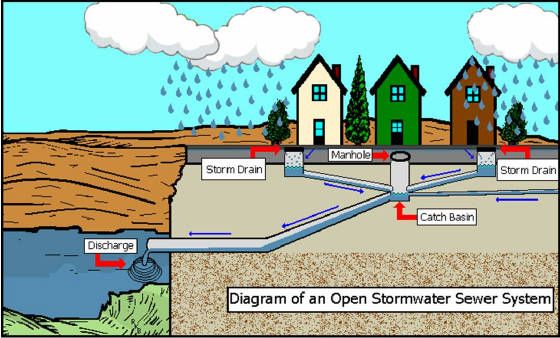
Stormwater is rainwater and melted snow that runs off streets, lawns, and other sites. When stormwater is absorbed into the ground, it is filtered and ultimately replenishes aquifers or flows into streams and rivers. In developed areas, however, impervious surfaces such as pavement and roofs prevent precipitation from naturally soaking into the ground. Instead, the water runs rapidly into storm drains, sewer systems, and drainage ditches, and can cause:
- Downstream flooding
- Stream bank erosion
- Increased turbidity (muddiness created by stirred-up sediment) from erosion
- Habitat destruction
- Changes in the stream flow hydrograph (a graph that displays the flow rate of a stream over a period of time)
- Sewer overflows
- Infrastructure damage
- Contaminated streams, rivers, and coastal water
- Why Manage Stormwater?
Traditional stormwater management design has been focused on collecting stormwater in piped networks and transporting it off-site as quickly as possible, either directly to a stream or river, to a large stormwater management facility (basin), or to a combined sewer system flowing to a wastewater treatment plant.
Low-impact development (LID) and wet-weather green infrastructure address these concerns through a variety of techniques, including strategic site design, measures to control runoff sources, and thoughtful landscape planning.
LID aims to restore natural watershed functions through small-scale treatment at the source of runoff. The goal is to design a hydrologically functional site that mimics predevelopment conditions.
*Should you observe a polluted or questionable discharge from a stormwater outfall in the Borough or observe illegal deposition of materials into a storm drain inlet in the Borough, you should contact the Borough Manager immediately by calling the Borough Office (724 266-4070). Office hours are Monday through Friday 8:00am – 4:00pm, or email the Borough Manager – info@ambridgeboro.org